· Debt Settlement · 4 min read
Why Banks Agree to Settle for Less Than Total Outstanding
Learn why banks may agree to settle loans for less than the total outstanding and what it means for borrowers facing financial difficulty.

When someone is struggling with loan repayments, one question often comes to mind: why would a bank agree to accept less than the total outstanding amount?
At first, it may seem confusing. After all, banks are financial institutions that expect full repayment. However, in certain situations, banks may consider settlement as one of the possible ways to resolve a difficult account.
Understanding why this happens can help borrowers make more informed and calm decisions during financial stress.
What Does Loan Settlement Mean?
Loan settlement generally refers to a situation where a borrower and lender come to an understanding when full repayment becomes difficult. Instead of continuing with prolonged recovery efforts, both sides may explore a way to close the account under specific conditions.
Settlement is usually considered in situations of financial hardship rather than as a routine option.
Why Banks Consider Settlement
There is no single reason that applies to every case. However, banks may consider settlement based on certain practical factors.
1. Recovery Uncertainty
When a borrower is unable to repay due to genuine financial difficulty, recovery may become uncertain. In such cases, continuing the process indefinitely may not always be efficient.
Settlement can sometimes be viewed as a way to bring closure rather than extending unresolved accounts.
2. Long-Running Accounts
Some loan accounts remain unresolved for a long period. Ongoing recovery efforts, communication, and administrative handling require time and resources.
In certain situations, resolving the account through settlement may be considered a practical step.
3. Financial Hardship of the Borrower
Situations like job loss, business slowdown, or unexpected expenses may affect repayment capacity.
When borrowers are unable to meet full obligations despite efforts, banks may review the situation differently. Settlement discussions may arise from this context.
4. Cost of Continued Recovery Efforts
Recovery processes may involve communication, follow-ups, and administrative costs. If recovery becomes complex or prolonged, banks may evaluate alternative approaches.
Settlement may be considered as one way to manage such situations.
5. Structured Resolution Approach
Banks often follow structured processes for handling stressed accounts. Settlement may be one of the options within such frameworks, depending on internal policies and case-specific factors.
Each case is evaluated individually.
Increasing debt pressure and borrowing habits have been widely discussed in financial reports, including recent coverage on rising borrowing risks among individuals in India.
What It Means for Borrowers
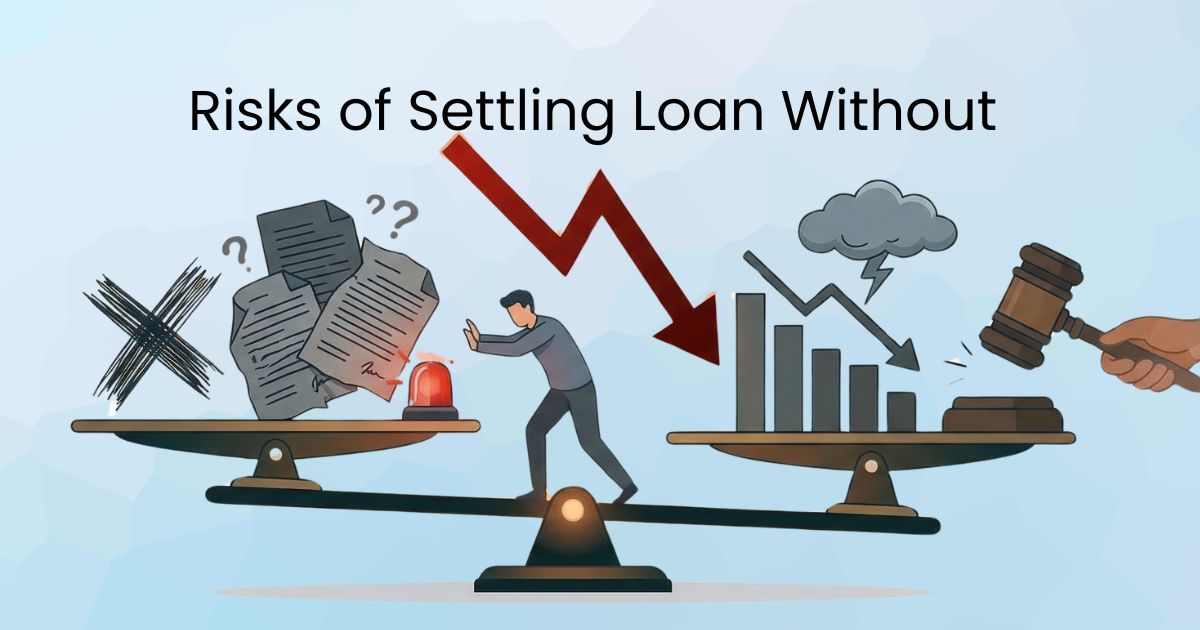
While settlement may reduce immediate pressure, it is important to understand that it is not a simple shortcut.
Borrowers should be aware that:
- Settlement may be reflected in credit history
- Future borrowing may be evaluated differently
- It should be considered carefully, not impulsively
Financial decisions during stress should always be made with clarity.
Is Settlement Always the Right Choice?
For some individuals, continuing regular repayment may be more suitable if income is stable. For others facing significant hardship, settlement may be explored as an option.
The right approach depends on:
- Financial condition
- Repayment ability
- Long-term financial goals
There is no one-size-fits-all answer.
For individuals who still have some repayment capacity, focusing on smart ways to manage EMI payments may be a more stable approach instead of immediately considering settlement.
Common Misconceptions
Myth: Banks easily agree to a settlement
Settlement is usually considered under specific circumstances and not as a standard option.
Myth: Settlement solves all financial problems
It may provide relief in certain situations, but financial discipline is still required afterwards.
Myth: Everyone can negotiate a settlement
Each case depends on individual financial conditions and lender evaluation.
Things to Consider Before Exploring Settlement
Before considering settlement, it may help to:
- Review your full financial situation
- Understand your repayment capacity
- Avoid acting under pressure
- Seek clarity about implications
When to Seek Guidance
If you are unsure about your situation or facing ongoing repayment pressure, seeking structured guidance may help.
Support can help you:
- Understand your options
- Manage communication with lenders
- Reduce financial stress
If you are exploring loan settlement or dealing with repayment challenges, platforms like ExpertPanel.org provide borrower-focused support to help navigate such situations responsibly.
Conclusion
Banks agreeing to settle for less than the total outstanding amount is not about giving up on recovery. It is often about finding a practical resolution in situations where full repayment becomes difficult.
For borrowers, the key is not just understanding settlement, but making decisions based on clarity and long-term financial stability.
Financial challenges can happen, but informed decisions often make the biggest difference.
FAQs
1. Why do banks offer loan settlement?
Banks may consider settlement in situations where recovery becomes uncertain or prolonged.
2. Is loan settlement a common practice?
It may be considered in specific cases depending on borrower circumstances and lender policies.
3. Does settlement affect future loan applications?
Settlement may be reflected in credit history and may influence future evaluations.
4. Can I request a settlement anytime?
Requests may be considered based on individual financial situations and lender review.
5. Should I take professional guidance before settling a loan?
Many individuals seek guidance to better understand implications and available options.
Disclaimer
The information shared in this blog is for general awareness only. Every borrower’s situation may differ, and the actual process or outcome can vary based on individual circumstances.