
· Loan Resolution · 4 min read
The Silent Struggle of Farmers: Breaking Free from the Debt Trap
Farmers are struggling with rising debt, unstable crop prices, late rains, and constant recovery pressure. Loan waivers offer only temporary relief; long-term solutions lie in FPOs, insurance, financial literacy, and stronger government support to help farmers break free from the debt trap.
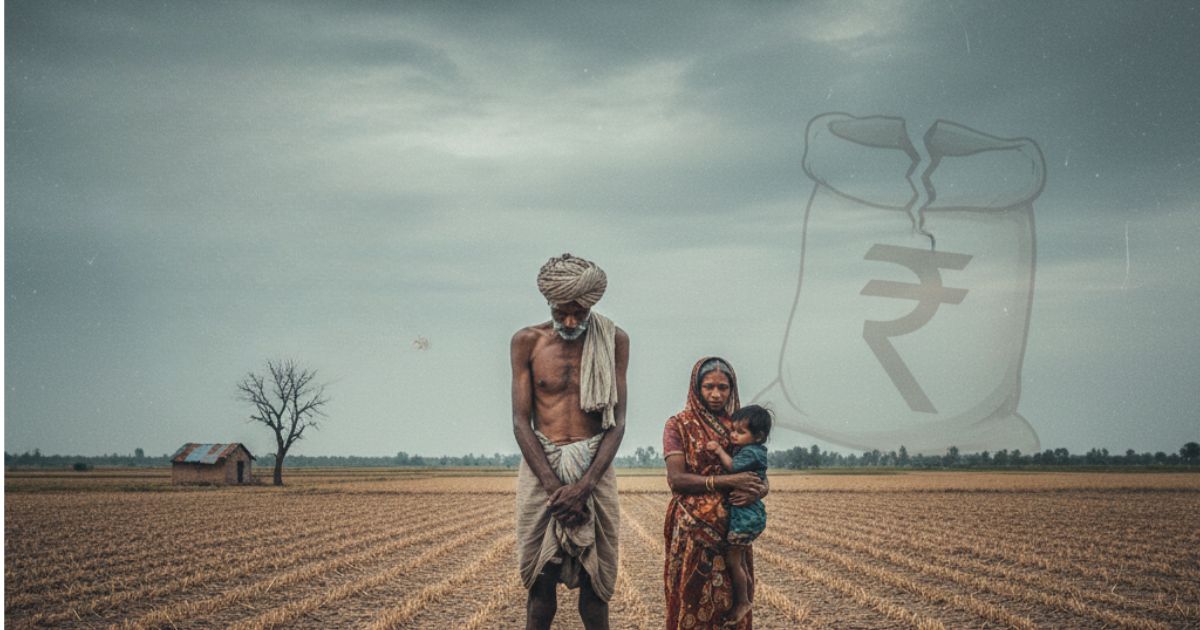
Farming is often seen as honest, peaceful work, but behind the green fields lies a struggle most people never notice. Many farmers take loans to buy seeds, fertilizers, and basic tools, hoping their crops will earn enough to repay the money.
But when rains are late, when crop prices fall, or when expenses rise, farmers end up earning far less than expected. This forces them to borrow again, slowly creating a debt cycle that becomes harder to break every year.
This brings us to an important question: Is loan forgiveness alone enough to solve farmers’ problems?
In this blog, we explore why farmers fall into debt and what practical, long-term steps can support them.
Burden of Farmers’ Debt
The debt pressure on farmers goes far beyond financial worries—it affects their mental peace, family life, and future decisions.
Many farmers face daily recovery calls from banks or collection teams. This constant pressure makes it difficult for them to focus on their fields or stay hopeful about the next harvest.
When things get worse, farmers often wait for loan waivers, but these bring only temporary relief. Once the new season begins, new expenses come back, and the cycle continues.
Nature also plays a major role.
Late rains, unpredictable weather, and crop diseases add more uncertainty. At the same time:
● Fertilizers and pesticides cost more every year
● Crop prices remain low
● Bank interest keeps rising
To survive, farmers take new loans to repay old ones, creating a deeper debt trap.
Practical Ways to Escape the Debt Trap
Farmers escaping debt might seem difficult, but there are real and practical solutions that can make their lives better. Below are some proven ways to rebuild financial stability.
1. Farmer Producer Organizations (FPOs)
An FPO is a group of farmers who join hands to work together.
● They buy seeds and fertilizers in bulk at lower prices
● They sell crops together to get better market rates
● They receive training, expert guidance, and direct market access
FPOs remove middlemen, improve bargaining power, and help small farmers earn more.
One farmer alone is vulnerable, but a united group becomes strong.
2. Crop Insurance & Disaster Compensation Portals
Many farmers avoid crop insurance because it seems complicated, but it is one of the biggest safety nets they can have:
● Protection from losses due to rain failure
● Support during pest attacks
● Compensation when storms or natural disasters damage fields
Government disaster compensation portals also offer financial relief, but many farmers don’t know how to apply or track claims.
Learning how these systems work can save farmers thousands of rupees.
Also Read: What’s New for Farmers? Government Considers Raising Kisan Credit Card Loan Limits!
One bad season can cause huge losses—insurance helps farmers stand back up.
3. Financial Literacy & System Awareness
Farmers are experts in farming, but banking and paperwork can feel confusing.
Without financial knowledge, many farmers:
● Take high-interest loans
● Miss EMI deadlines
● Fail to use subsidies
● Get misled by middlemen
With basic financial literacy, farmers can:
● Choose safer loan options
● Use government portals easily
● Avoid scams
● Plan repayments better
Simple workshops, village meetings, and short mobile videos can create big improvements in decision-making.
4. Government & State Support Programs
The government has many schemes meant for farmers, yet many remain unused simply because farmers don’t know about them.
These programs include:
● Subsidies for seeds, fertilizers, and machinery
● Low-interest loans
● Minimum Support Price (MSP)
● Soil health cards
● Kisan Credit Card (KCC)
● Irrigation grants
● Free or subsidized crop insurance
Better awareness and easier access can help farmers reduce costs and increase income significantly.
Lessons for the Future
For long-term stability, farmers need:
● Stronger support systems
● Better financial knowledge
● Smarter use of technology
● Wider participation in FPOs
● Transparent crop prices
● Government benefits reaching the right people
Farmers deserve a system that protects them—not one that leaves them alone in the crisis.
Conclusion
Farmers carry a heavy burden, and loan waivers alone cannot solve it. They offer only temporary relief and do not address the root causes of the debt trap.
Real change happens when farmers have:
● Practical tools
● Financial literacy
● Crop protection
● Fair market access
● Support programs that truly reach them
Small steps like joining FPOs, learning how insurance works, using government schemes, and improving financial awareness can make a big difference. Also, read about the signs that show you fell under a debt trap and how you can escape them..
Disclaimer
The information shared in this blog is for general awareness only. Every individual’s situation may differ, and the actual process or outcome can vary based on personal and legal circumstances.
.jpg.CyBm4nK9.jpeg)